

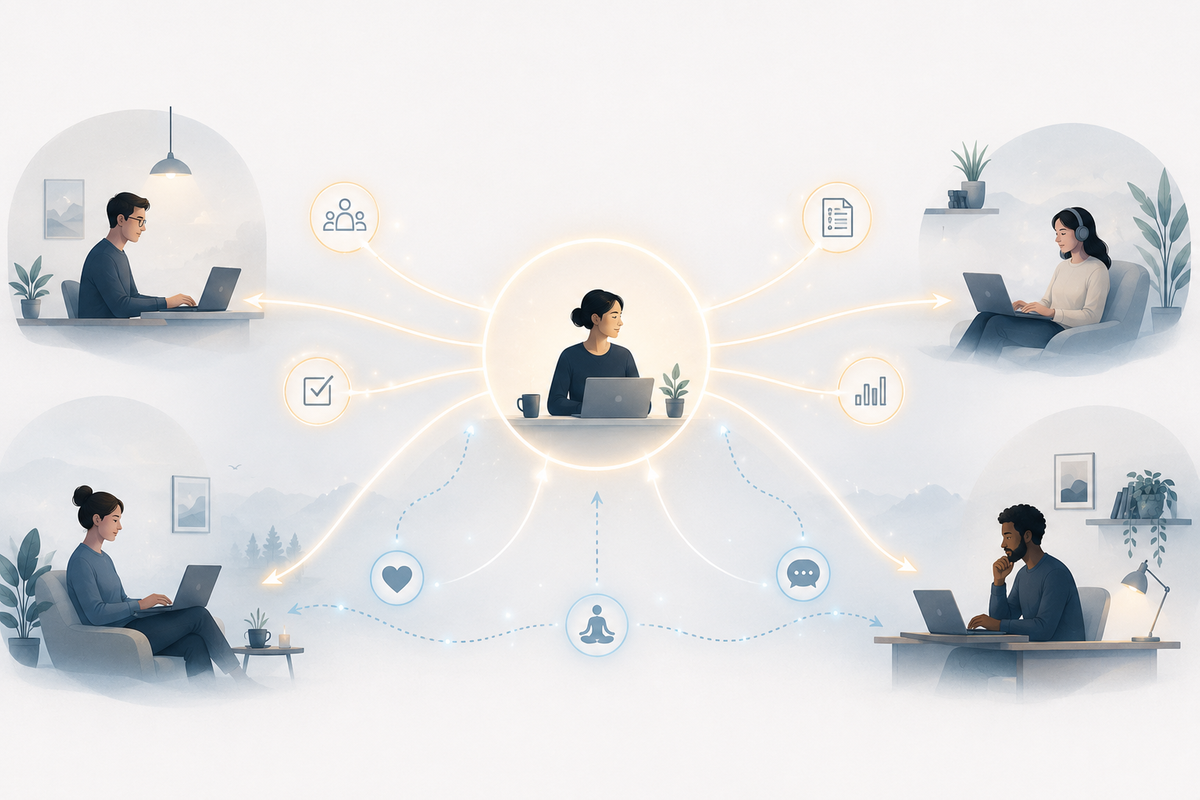
While remote work was the exception just ten years ago, it has now become a fairly common standard in office based professions, and a large proportion of positions, particularly in IT, offer at least a partially hybrid working model. However, a remote model of teamwork places specific demands on the way employees are managed. Here are several recommendations for leaders of teams working either fully or partially remotely.
Set up communication processes correctly
As the Salesforce blog states, effective communication is the foundation of successful teamwork. Particularly in a remote working environment, you must make communication between employees as easy as possible. Therefore, conduct a detailed audit of your current communication procedures and channels and make sure that communication is not breaking down at any point.
Establish an appropriate system of rewards and productivity indicators
You must also realise that the procedures, rules, and employee performance evaluation parameters that were applied in the past may not necessarily be suitable in this new remote working model. If you are still using the same productivity indicators and key performance indicators that were in place when your team worked in a traditional office environment, it may be time to examine whether your procedures are outdated and whether your KPIs should be reassessed.
Be extremely thorough when delegating work
Although you should avoid micromanagement as much as possible, remote work requires you to be more specific when delegating tasks and to ensure that everyone knows exactly what they are expected to do. Since you do not see your subordinates working in a standard workplace environment, you naturally have less oversight of what they are focusing on and whether they are spending too much energy on less important tasks.
Do not forget employee well being
Finally, it is necessary to pay greater attention to the mental well being of your subordinates. Watch for signs that someone is struggling with their role, that they may be at risk of burnout, or that they are lacking social interaction. These signals may not be as visible in a remote working environment as they are in a traditional workplace setting.
-mm-